Handbook · Situations · 8 min read
Professional email communication
Email isn't just about passing on information — it builds (or destroys) trust and respect. The anatomy of a message people are happy to answer.
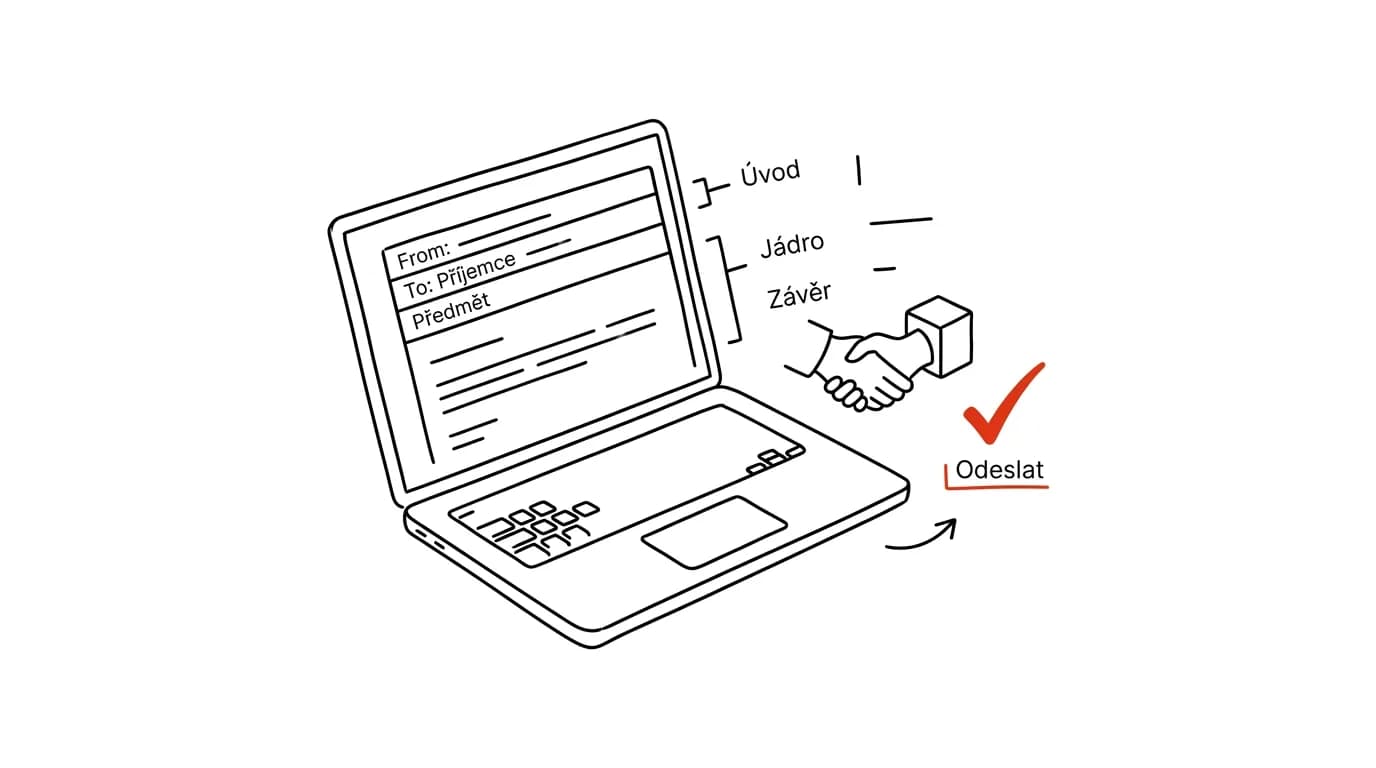
Writing a professional email is a core skill in the modern workplace. It isn't just about passing on information — it's about building trust, respect, and effective collaboration. Every message you send says something about you: how you think, how you treat other people's time, and whether you're someone problems can be solved with.
An example shows the difference best. The situation is the same in both cases: project manager Peter has a tight schedule and needs more time.
Example of a bad work email
Subject: Re: Project

Hi,

what is this supposed to mean??? These deadlines make no sense at all and
I have no idea how I'm meant to hit them. Why can't anyone help me???
I need more time.

Later
Peter
Why this email is a problem:
- No proper greeting
- An aggressive, negative tone
- An unclear request — what is the recipient actually supposed to do?
- No constructive solution
- Spelling and style problems
- An unprofessional sign-off
- The subject line “Re: Project” says nothing at all
The reply to an email like this will be cool at best. At worst, the recipient will remember that Peter is difficult — and that's a reputation that's harder to erase than a single message.
Example of a good work email
Subject: Request to adjust Project X deadlines - proposed solution

Dear Ms. Bennett,

I'm writing regarding the current schedule for Project X. After a
thorough review of where we stand, I've identified the following risks
that could jeopardize on-time delivery:

1. Insufficient time for comprehensive testing
2. Limited resources during the critical implementation phases
3. A risk of lower quality output if we keep the current schedule

I would therefore like to propose the following:
- Extending the deadline by 10 working days
- Redistributing resources across the team
- Adjusting the intermediate project milestones

I would be grateful for your view on this and for the chance to discuss
the proposed changes in person.

Best regards,
Peter Smith
Project Manager
Why this email is professional:
- A clear, specific subject line — the recipient immediately sees the topic and the intent
- A proper greeting
- Structured content you can scan at a glance
- Specific problems named instead of a general complaint
- A constructive proposal
- A professional close
- A complete signature including the job title
Same problem, same writer, same need. The difference is that the second version does some of the work for the recipient: it names the risks, offers options, and leaves them the decision. An email like that is easy to answer — which is why it gets answered quickly.
The anatomy of a good email
- 1SubjectSpecific and to the point — the recipient can see the content and the priority.
- 2GoalOne message = one clear goal. What should the recipient do?
- 3StructureShort paragraphs, bullets, numbers. Nobody reads a wall of text.
- 4SolutionDon't just describe the problem — propose a fix. Keep emotion to a minimum.
- 5CheckRead it back: spelling, tone, attachments.
The key principles of professional email
1. A formal structure. A clear subject line, a greeting that matches your relationship with the recipient, structured text, and a professional close with a signature. Structure isn't formality for its own sake — it's a service to a reader who has another forty messages in their inbox.
2. Tone. Factual and constructive, respectful, positive, and solution-oriented. An email written in the heat of the moment should sit for at least an hour; in the morning you'll usually rewrite it. Never reply to an unpleasant message immediately.
3. Content principles. A clear goal for the message, specific information, structured points, a proposed solution, and minimal emotion. A simple rule applies: if it isn't obvious after reading what the recipient should do, the email has failed.
4. Technical details. Spell check, a professional email address, a sensible font and size, readable formatting. A signature with your role and contact details saves the other side a search.
5. General tips. Read your email before you send it. Be brief and to the point. Keep a professional tone even when the other side doesn't. And respect the culture of the company — excessive stiffness can be as jarring in a relaxed workplace as over-familiarity is in a conservative one.
Principles that pay off
From experience: I've made it a rule that after finishing any longer email I ask myself a single question — could I sum up the content in one sentence in the subject line? If not, it means I'm dealing with several things at once and should send two emails instead of one.
Professional email isn't about polite formulas. It's about building trust, respect, and effective collaboration — and that pays you back in every future project you work on with that person.
How to process email in bulk (and not spend 28 % of your day on it) is covered in the Inbox Zero chapter.
Related tips
Filters: keep newsletters out of your inbox for good
An automatic rule moves newsletters under a label and marks them as read. You read them when you want to.
Gmail from the keyboard: E archives, R replies
E
Turn on keyboard shortcuts in Gmail and clear your inbox several times faster — without a single click.
Mute the conversation that's no longer about you
M
An endless “reply all” thread? The M key mutes the conversation — new replies go straight to the archive.
Schedule your email to send at the right time
An email written Saturday evening can go out Monday at 8 AM. Scheduled sending respects the recipient's time — and your reputation.
Want to keep the momentum?
One tip from the handbook by email each week — in an order that makes sense.
1 tip a week · no spam · unsubscribe in one click