Handbook · Foundations · 7 min read
How to work in sync with your own body
Circadian rhythm, sleep, food and movement — four biological levers that shape your performance more than any app ever will.
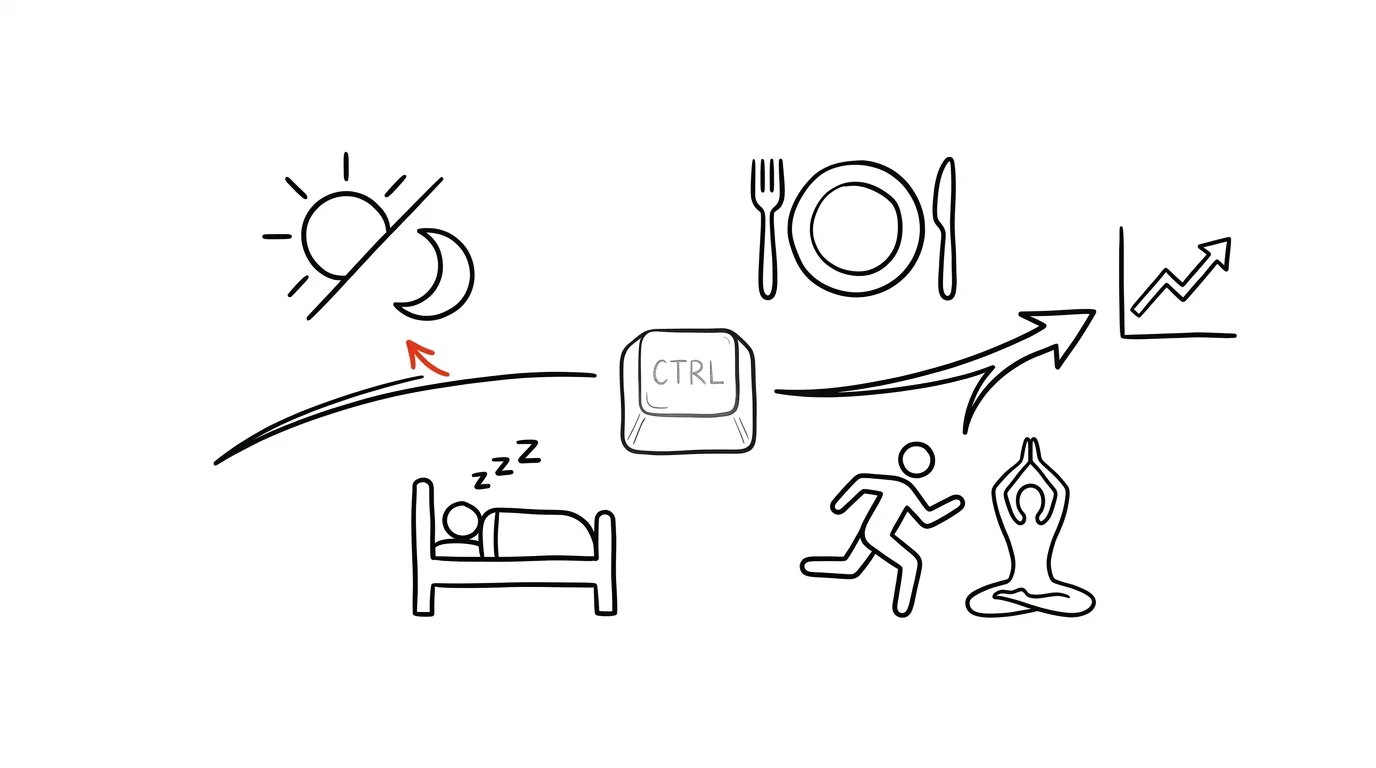
Have you ever tried coding at three in the morning, or writing an important report right after lunch? Then you know it isn't the best idea. It isn't your fault — it's biology. Let's put it to work for us instead of fighting it.
Circadian rhythm: your internal calendar
Your body's internal clock doesn't just govern tiredness and alertness — it drives body temperature, hormones and cognitive performance. And everyone's is set a little differently:
- 5–6Lark: natural wake-uppeak productivity in the morning, winding down around 9 p.m.
- 8–9Owl: natural wake-uppeak productivity in the afternoon and evening, winding down after midnight
- PeakDemanding work at the energy peakdeep work, important decisions, creative thinking
- DipRoutine work during the slumpemail, admin, mechanical tasks
How to do it: track your energy and productivity for a week, find the recurring peaks — and schedule demanding tasks into your “peak” hours. If you can't adjust your working hours, at least adjust the order of tasks within the day.
Sleep: the foundation of performance
Quality sleep isn't a luxury. It's the time when your brain literally flushes out toxins and processes the day's information.
In the morning, daylight as soon as possible after waking helps — and skip the snooze button.
Food: fuel for the brain
- Breakfast: complex carbs (oats), protein (eggs, yogurt), healthy fats (avocado, nuts) — within an hour of waking.
- Lunch: light but nourishing. Plenty of vegetables, good protein. Heavy, fatty meals = an afternoon crash.
- Snacks: nuts and seeds, fruit, veggie sticks with hummus.
- Timing: main meals every 3–4 hours, the last one 2–3 hours before bed.
- Hydration: 8–10 glasses of water a day, the first one right after waking. Cut caffeine after 2 p.m.
Movement: body in motion = brain in action
Exercise directly improves memory, focus, creativity and problem-solving.
- Aerobic activity (walking, running, swimming, cycling): 30 minutes a day at moderate intensity, ideally in the morning or early afternoon.
- Strength training 2–3 times a week: it boosts BDNF — a protein critical for learning — and improves sleep quality.
- Stretching for 10–15 minutes daily: it counteracts the aches of desk work and lowers stress.
And during the workday: a morning stretch (5 minutes), a walk at lunch (15–30 minutes), micro-breaks every hour (2–3 minutes), and an evening walk for better sleep.
Putting it into practice
- First week: track your natural rhythm, set up an evening routine, start taking morning walks.
- First month: adjust your meal timing, establish regular exercise, optimize your sleep environment.
- Long term: tune your daily schedule around your energy and experiment — a sleep tracker and an energy journal will show you what works.
This isn't about radical changes. It's about gradually building habits that support the biology you already have.
Related tips
Bedtime mode: your phone goes to sleep before you do
An hour before bed, your phone dims, quiets down, and stops tempting you. Set it once — and sleep better every night.
Top edge of your monitor at eye level
A neck that hurts from a monitor set too low. A stand or arm for a few dollars fixes years of discomfort.
A height-adjustable desk: alternate, don't just stand
The trick isn't standing all day — it's alternating positions, plus a bit of movement that fits into your work without interrupting it.
Light controls your energy: bright mornings, warm evenings
A sunrise alarm clock and smart bulbs set your circadian rhythm better than willpower ever could.
Want to keep the momentum?
One tip from the handbook by email each week — in an order that makes sense.
1 tip a week · no spam · unsubscribe in one click